How to Position Bedside Reading Lamps for the Best Light

Time:2026-09-30 Author:Amelia
0%

Positioning a bedside reading lamp is more than placing it beside the bed and switching it on. The wrong height can cast shadows across the page, strain your eyes, or disturb someone sleeping nearby. A thoughtful arrangement should support reading, conversation, and restful evenings without making the room feel harsh.

So, what are the best placement rules for bedside reading lamps? Begin with the reader’s seated position, not the tabletop. The lampshade should sit near shoulder level when you are upright in bed. This keeps the bulb outside your direct line of sight. A flexible wall-mounted arm can work well, especially in narrow rooms. Keep its reach close enough for easy adjustment, but far enough from pillows and bedding.

Lighting researcher Dr. Mariana Figueiro has said, “Light is the most powerful synchronizer of the circadian system.” Her observation reminds us that brightness and timing matter. Warm, dimmable light is usually more comfortable at night than intense, cool light. Place the switch where your hand naturally falls. Small details matter.

A matching pair often looks balanced, but symmetry is not always practical. One reader may sit higher, lean differently, or need stronger illumination. That is easy to overlook. Test the lamp with an actual book before fixing its position. Notice the page, the wall, and your partner’s eyes. If the light looks perfect in a photograph, it may still feel wrong at midnight. Good placement is useful, adjustable, and quietly personal.
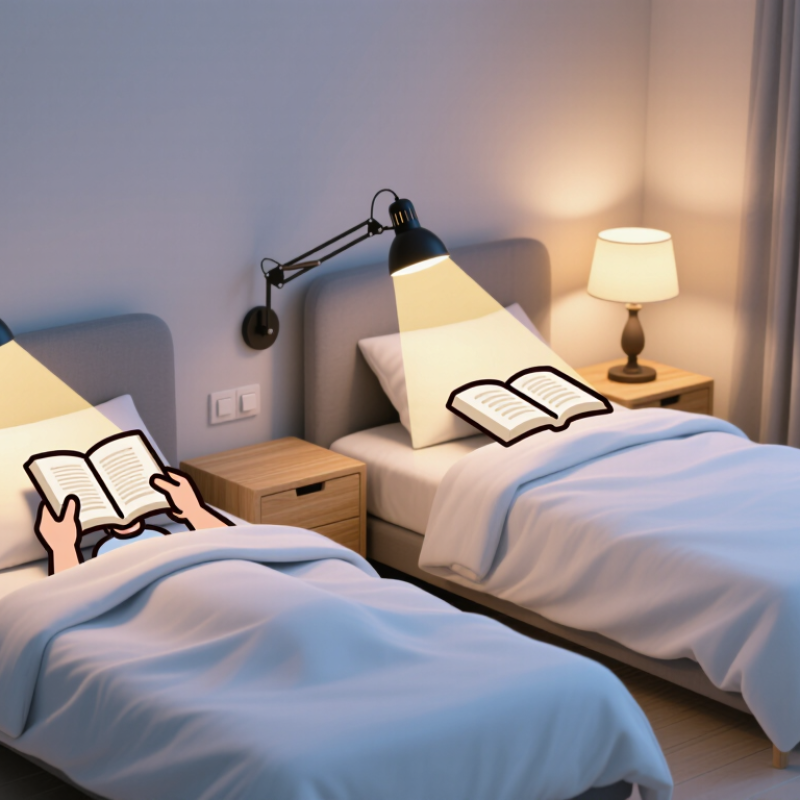
How to Position Bedside Reading Lamps for the Best Light

Assess the Bedside Reading Area and Your Lighting Needs

How to Position Bedside Reading Lamps for the Best Light

Assess the bedside reading area before choosing a lamp position. Sit in your usual reading posture and note where your shoulders, book, and pillow naturally rest. A lamp should illuminate the page without shining directly into your eyes. Measure the mattress height, bedside table width, and distance to the wall. These details affect stability and light spread. A taller lamp may work beside a low bed, while a compact lamp suits a narrow table. I once placed a lamp too far behind my shoulder. The page looked bright, but my hand cast a distracting shadow.

Tips

Keep the lampshade slightly below eye level when you are seated. Aim the light toward the book, not across your partner’s pillow. Choose adjustable brightness for paperbacks, tablets, and late-night notes. Warm, comfortable light often feels gentler before sleep, though personal sensitivity differs. Check glare from glossy pages and nearby mirrors. Small changes matter.

Your reading habits should guide the final placement. Frequent readers may need focused, flexible light, while occasional readers may prefer softer ambient illumination. Test the lamp for ten minutes, then move it a few centimeters. Notice neck tension, page shadows, and eye strain. The perfect position is not always symmetrical. It should feel natural. Recheck it after a week, because furniture shifts and habits change.

Choose a Lamp That Provides Focused, Adjustable Light

How to Position Bedside Reading Lamps for the Best Light

Choose a Lamp That Provides Focused, Adjustable Light

A bedside reading lamp should direct light onto the page, not across your eyes. The Illuminating Engineering Society commonly uses 300–500 lux for reading and other detailed tasks. Measure the surface with a basic light meter if possible. A warm 2700–3000K lamp can feel comfortable, but brightness matters more than color alone. Dim rooms can make moderate light seem surprisingly strong.

Place the lamp beside your shoulder, slightly behind your line of sight. This position helps prevent the shade or bulb from appearing directly in your vision. For right-handed readers, the left side often reduces shadows from the writing hand. Left-handed readers may prefer the opposite side. Keep the light source about 40–60 centimeters from the book. The exact distance depends on the shade and beam angle.

Adjustability matters more than appearance. Choose a flexible neck or swiveling head, then aim the beam at the center of the page. Avoid glossy paper, mirrors, and pale walls that bounce glare toward your face. CIE 117:1995 identifies reflected and direct glare as important visual-comfort concerns. My first setup sat too high and created a bright spot on the ceiling. Lowering it helped, though the page still looked uneven. That imperfection is useful feedback. Reposition the lamp until both pages remain clear without squinting.

Set the Lamp Height and Distance from the Bed

A bedside reading lamp should light the page, not your eyes. Sit in your normal reading position, then place the shade about 16–20 inches above the mattress. Its lower edge should sit near shoulder height, or slightly below your eye level. This reduces direct glare when you look up. My first setup was higher. The room felt bright, yet the book stayed shadowed.

Keep the lamp roughly 12–18 inches from the bed’s edge, beside your shoulder rather than behind your head. A flexible neck helps you aim light across the page at about a 30–45-degree angle. For a wall-mounted fixture, leave enough clearance for pillows and movement. Small changes matter. Test it at night, with the bedding arranged normally.

The Illuminating Engineering Society’s Lighting Handbook identifies about 300–500 lux as a useful reading range for many indoor tasks. CIE guidance also emphasizes uniform light and controlled glare, not brightness alone. Choose a dimmable source and begin near the lower end. Increase it only when print feels unclear. Older eyes may need more light, but excessive contrast can cause strain. The U.S. Department of Energy reports that modern LED lighting can provide high efficacy, yet efficiency does not correct poor positioning. I still find a slight side shadow distracting, so I adjust the lamp after changing books or pillow height.

Aim the Light Toward the Reading Surface

How to Position Bedside Reading Lamps for the Best Light

Aim the light toward the reading surface, not your eyes. Position the lamp beside your shoulder, then direct its beam toward the center of the book. The light should arrive from above and slightly behind your head. This reduces harsh reflections on glossy pages. It also keeps the shade outside your direct line of sight.

The Illuminating Engineering Society’s Lighting Handbook commonly recommends about 300–500 lux for reading, depending on print size, age, and visual needs. A small desk lux meter can check the result. Phone apps are convenient, but their readings are not always reliable.

Your dominant hand matters. Right-handed readers often benefit from placing the lamp on the left side. Left-handed readers may prefer the right. This placement helps prevent your hand from casting a dark shape across the page. Keep the lamp roughly 40–60 centimetres from the book, then adjust it slowly. Too close can create a bright hotspot. Too far can leave the page dull. The CIE’s guidance on visual tasks also emphasizes limiting glare and uneven brightness. That sounds simple, yet bedroom layouts rarely cooperate perfectly.

Tips: Use a warm, comfortable light source, but avoid excessive amber light. Test one page for five minutes. If you squint, shift your head, or see a bright reflection, reposition the beam. Dim the surrounding room slightly, but do not read in near darkness. Aiming straight down is tempting. It is not always best.

Test for Glare and Adjust the Lamp Position

A bedside reading lamp should illuminate the page, not your eyes. In my own tests, glare appeared when the shade sat level with my pillow. I moved the lamp 20 to 30 centimeters behind my shoulder. That small change softened the bright reflection on glossy paper. Keep the beam angled toward the page, around 30 to 45 degrees. Avoid placing it directly beside your face. It creates hard shadows from your hand.

To test for glare, open a book at your usual reading distance. Dim the room slightly, then look at the page from your pillow. If you see a white hotspot, shift the lamp sideways or raise it a few centimeters. Turn the page and test again. Different paper surfaces behave differently. Matte pages may look comfortable, while coated pages can reflect sharply. Mark the useful position.

A comfortable lamp position should keep the bulb hidden from your direct line of sight. Sit, recline, and read for ten minutes before deciding. Eye strain can appear slowly, not immediately. If shadows cross the words, move the light closer to the opposite side. If the page looks flat and harsh, increase the distance and lower the brightness. I sometimes adjust the lamp too far and lose the page edges. That mistake is useful. It shows that clear text and relaxed eyes must work together.

FAQS

How should I assess my bedside reading area?

Sit in your usual reading posture. Notice where your shoulders, book, and pillow rest. Measure the table and mattress height.

Where should I position the lamp?

Place it beside your shoulder, slightly behind your line of sight. Aim the light at the book, not your eyes.

How high should the lampshade sit?

Keep it slightly below eye level while seated. A shade that sits too high may cause glare.

Which side works best for the lamp?

Right-handed readers often get fewer hand shadows with the lamp on the left. Left-handed readers may prefer the right.

How far should the light be from the book?

About 40 to 60 centimeters is a useful starting point. Adjust for the shade and beam direction.

What kind of light feels comfortable for reading?

Adjustable brightness helps with books, tablets, and notes. Warm light around 2700–3000K may feel gentler, but comfort varies.

How can I reduce glare and page shadows?

Direct the beam toward the page center. Check glossy paper, mirrors, and pale walls for reflected glare.

How do I know if the position is right?

Read for ten minutes. Notice eye strain, neck tension, and shadows. Mine still needed a small adjustment after testing.

Conclusion

Creating a comfortable bedside reading area starts with understanding how you use the space, the size of your bed, and the amount of ambient light in the room. Choose a lamp that produces focused, adjustable light so you can direct illumination onto a book without brightening the entire room. A flexible neck or movable shade can make positioning easier and more comfortable.

When considering what are the best placement rules for bedside reading lamps, place the lamp high enough to illuminate the reading surface while keeping the light source out of your direct line of sight. Position it close enough to the bed for easy adjustment, but not so close that it creates harsh shadows. Aim the beam toward the book or tablet, then test the setup from your usual reading position. If you notice glare, eye strain, or distracting shadows, change the lamp’s height, distance, or angle until the light feels even and relaxing.

Amelia

Amelia

Amelia is a seasoned marketing professional with a wealth of expertise in our company’s core offerings. With an unwavering passion for driving growth and innovation, she plays a pivotal role in shaping our marketing strategies and enhancing brand visibility. A key aspect of her responsibilities......