Why Is Lighting Crucial for Real Estate Sales Offices?

Time:2026-11-12 Author:Madeline
0%

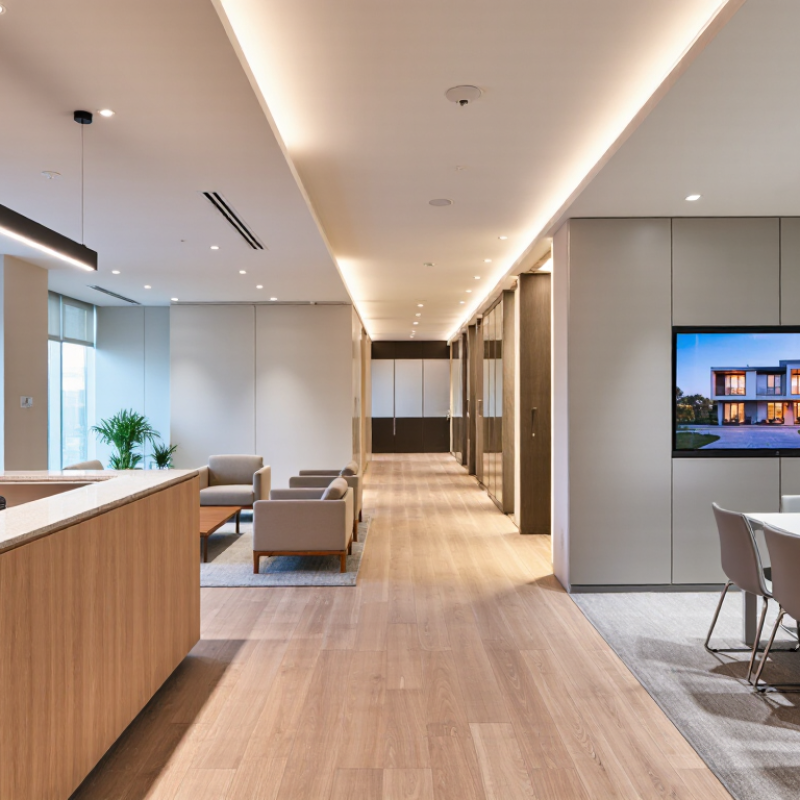
Why is lighting design crucial for real estate sales offices? Because buyers judge more than floor plans. They notice how a space feels when they enter. Soft, even light can make a reception desk feel welcoming. Glare on a property screen can make plans harder to read. A dim meeting table may also make finishes look dull or misleading. Small details matter.

Architect Louis Kahn is often credited with saying, “A room is not a room without natural light.” His observation helps frame the issue, though daylight alone is not enough. A sales office needs balanced lighting throughout the day. Sunlight can shift, create screen reflections, or fade samples near a window. Adjustable blinds and carefully placed fixtures can help manage these changes. Warm, comfortable light in a waiting area can feel inviting, while clear task lighting helps staff review documents and buyers examine material samples. Keep color appearance consistent where possible. A paint chip should not look dramatically different under the meeting-room lights.

Good design supports clear conversations. It does not guarantee a sale. Staff knowledge, honest information, and the property itself still matter. And lighting can be subjective. Some clients may prefer a brighter room; others may find it harsh. That is why controls and a real-world walkthrough are useful. Test the space at different times, with screens on and samples out. The practical answer to why is lighting design crucial for real estate sales offices is simple: thoughtful light helps people see, compare, and feel at ease, without asking the room to do more than it can.
Why Is Lighting Crucial for Real Estate Sales Offices?

The Role of Lighting in Real Estate Sales Offices

Lighting shapes how buyers read a sales office before anyone speaks. A bright, even reception feels open; harsh downlights can cast shadows across faces and floor plans. People notice. At a model display, focused light can reveal countertop texture and finish samples, while glare on a tablet makes details harder to compare. Good lighting supports the conversation, but it cannot make a poorly planned space feel welcoming.

The technical targets matter, too. EN 12464-1:2021 recommends 500 lux maintained illuminance for office tasks such as reading and writing, with limits on glare. That is a useful reference for desks where agents review documents with clients, not a universal setting for every corner. The WELL Building Standard v2 also includes a daytime benchmark of 150 equivalent melanopic lux at eye level, reflecting light’s role beyond visibility. Details matter. In practice, daylight shifts, screen brightness, and surface colors change the experience through the day. I would not treat a meter reading as the whole answer; a space can meet a target and still feel flat. A short visit at different times may reveal more than the specification sheet.

How Lighting Shapes First Impressions and Property Perception

When a buyer enters a real estate sales office, lighting sets the tone before anyone speaks. A bright, even reception area can feel open and organized. A harsh ceiling fixture may do the opposite, casting shadows across faces and making the room feel less welcoming. The effect is immediate. Soft light near the entrance helps visitors pause and look around, rather than hurry toward the nearest chair.

Lighting also influences how people imagine a property. Neutral, well-distributed light helps plans, material samples, and photographs appear closer to their real colors. Glare on a display screen or glossy countertop can distract from useful details. In practice, placing adjustable lights beside presentation tables often works better than relying on one bright fixture overhead. Small choices matter. Daylight can help, but direct sun may wash out a model or make a sample wall look uneven.

There is a balance, and it is easy to overdo this. Warm lighting may make a lobby feel comfortable, yet it can distort paint and flooring colors. Cooler light can look crisp but feel clinical when used everywhere. A layered setup—general light, focused task lighting, and gentle accent lighting—lets staff guide attention without turning the office into a showroom stage. Check the space at different times of day. A corner that looks calm at noon may feel dim by late afternoon.

Why Is Lighting Crucial for Real Estate Sales Offices?

Recommended maintained illuminance for common office areas (lux)

A well-lit reception and meeting area can help visitors see people, materials, and property details clearly, supporting a welcoming first impression. Values shown are maintained-illuminance recommendations for selected indoor areas, based on EN 12464-1:2021; actual lighting needs depend on the space and task.

How Light Affects Client Comfort and Staff Performance

Why Is Lighting Crucial for Real Estate Sales Offices?
How Light Affects Client Comfort and Staff Performance

A property sale often begins at a desk, beneath a ceiling light. Harsh glare on floor plans or a dim reception corner can make clients feel less at ease. Soft, even lighting helps people read documents, study property images, and speak comfortably. Daylight can make a room feel more open, but direct sun may wash out screens and create distracting reflections. Bright is not always better.

Staff feel the difference, too. In its 2003 report Windows and Offices: A Study of Office Worker Performance, the California Energy Commission reported an association between window views and 6–12% faster call handling in one study. This does not prove that lighting alone caused the improvement. Still, it suggests that the visual environment deserves attention. A well-lit office can support focused conversations, though one layout will not suit every room or person.

Tips: Check the space at the hours clients usually visit. Use blinds to soften direct sun, and avoid placing screens opposite bright windows. Add task lighting where staff review contracts. Ask employees where glare or shadows disrupt their work; their answers may challenge the original design.

Why Is Lighting Crucial for Real Estate Sales Offices? — How Light Affects Client Comfort and Staff Performance
Lighting Dimension Practical Planning Target Client Comfort and Sales Experience Staff Performance and Use
General ambient illuminance Plan roughly 300–500 lux for common office and consultation tasks; use the applicable local lighting standard for final design. Supports comfortable movement and conversation without making the reception or meeting area feel dim. Provides a useful base level for everyday office work; task-specific work may need additional light.
Desk and document lighting Around 500 lux is a common maintained illuminance target for office reading, writing, and data-processing tasks. Makes floor plans, contracts, and printed property information easier to read during appointments. Helps staff see documents and screens clearly. Position task lights to avoid reflections and harsh contrast.
Glare control Use diffused or shielded luminaires, manage bright windows with blinds, and check screen and tabletop reflections. UGR 19 is a commonly specified limit for many office areas under EN 12464-1. Reduces visual discomfort from bright fixtures, windows, and reflections during meetings. Can make screen-based work more comfortable, especially where desks face windows or glossy surfaces.
Colour rendering Choose lamps with a colour rendering index (CRI/Ra) of at least 80 for general office use. Consider Ra 90 or higher where accurate colour assessment is important. Helps property finishes, printed plans, and material samples appear more natural and consistent. Supports reliable visual review of brochures, samples, and presentation materials.
Colour temperature A neutral-white range of about 3000–4000 K is a practical starting point; keep connected areas visually consistent. Creates a welcoming, coherent impression when reception, consultation, and presentation areas are viewed together. Allows a balanced appearance for routine work. Choose based on the space, finishes, daylight, and staff needs rather than assuming one setting suits everyone.
Daylight and window control Make use of available daylight while providing adjustable blinds or shades and electric lighting that can be controlled by area. Offers a brighter, more natural-feeling environment while helping prevent direct sun and uncomfortable brightness. Adjustable control helps staff respond to changing daylight and reduce screen glare.
Lighting flexibility Provide separate controls for reception, meeting rooms, workstations, and display areas; use dimming where compatible with the system. Lets staff set a comfortable scene for an informal welcome, a document review, or a presentation. Supports different tasks and occupancy patterns without requiring the whole office to use the same light level.
Flicker and maintenance Select quality, compatible LED drivers and controls; specify suitable flicker performance and replace or repair failed equipment promptly. Steady, well-maintained light helps the office feel cared for and visually comfortable. Reduces distracting lighting faults and helps maintain consistent conditions across work areas.

Planning note: Illuminance figures are maintained-lighting targets, not guarantees of comfort or performance. Confirm project requirements against current local regulations and applicable lighting standards.

Lighting Needs Across Different Office Areas

Lighting needs change from the front desk to the negotiation room.

In reception, soft, even light helps visitors read property brochures and notice staff faces without squinting. First impressions matter. Avoid placing bright downlights directly above the welcome desk; they can create harsh shadows on paperwork and faces. A modest wall light or shaded lamp can make the space feel less clinical, provided it does not cause glare.

Meeting rooms need balanced light for both conversation and screen viewing. Dimmable fixtures let staff lower brightness during a presentation, then restore it for reviewing contracts or floor plans.

At workstations, direct task lighting helps with detailed tasks, while controlled overhead light reduces reflections on monitors. Display areas benefit from focused lighting on models, sample materials, or listing boards, but too much brightness can wash out colors.

Corridors and staff rooms still need clear, consistent illumination, especially near steps and storage areas.

One detail is easy to miss: daylight changes throughout the day, so a setup that looks comfortable at noon may feel gloomy by late afternoon. Test the lighting at different times, and adjust where needed. No single setting suits every room or visitor.

Balancing Visual Quality, Flexibility, and Energy Efficiency

Why Is Lighting Crucial for Real Estate Sales Offices?

Balancing Visual Quality, Flexibility, and Energy Efficiency

Lighting shapes how visitors read a sales office before anyone speaks. A bright, even reception area feels welcoming, while harsh glare can make floor plans difficult to study. Choose light that renders finishes and model materials naturally. Neutral tones often help, but test them beside actual samples. A wall can look warmer under evening light. Details matter.

Flexibility is just as important. A display suite may host private consultations in the morning and group presentations later. Separate controls for the reception desk, model display, and meeting table let staff adjust the mood without lighting every corner. Daylight-responsive dimming and occupancy sensors can reduce wasted energy, when carefully commissioned. Poorly placed sensors may leave a room unexpectedly dim. Real offices are rarely perfect; settings often need adjustment after people begin using the space.

FAQS

How does lighting affect a real estate sales office?

Even light can make reception feel open and help clients read plans. Harsh downlights may cast shadows across faces.

What lighting level suits desks for reading and writing?

A common technical reference is 500 lux of maintained light for office tasks. It is not a setting for every corner.

Can daylight improve the office experience?

Daylight may make a room feel more open. Direct sun can wash out screens and create reflections. Use blinds when needed.

How can staff reduce glare on screens and documents?

Avoid placing screens opposite bright windows. Add task lighting near contracts, plans, and finish samples. Check during client hours.

Should model displays use different lighting from reception areas?

Often, yes. Focused light can reveal countertop textures and finish samples. Separate controls help staff adjust each area.

Can lighting controls save energy?

Dimmers, daylight-responsive controls, and occupancy sensors can reduce wasted light. Poorly placed sensors may leave a room unexpectedly dim.

Do lighting measurements tell the whole story?

No. A room can meet a target and still feel flat. Visit at different times, and check how surfaces and screens look.

How can an office test a new lighting plan?

Try a small area first. Review it in morning and evening light, then ask staff where shadows or glare remain. Some settings may need another adjustment.

Conclusion

Lighting plays a vital role in shaping the experience of a real estate sales office. Thoughtful illumination can create a welcoming first impression, highlight property models and materials, and help visitors understand the atmosphere and potential of a space. This explains why is lighting design crucial for real estate sales offices: it influences how clients perceive both the properties on display and the professionalism of the office itself.

Good lighting also supports comfort and concentration. Balanced brightness, controlled glare, and access to natural light can help clients feel at ease while enabling staff to work effectively throughout the day. Different areas may need different solutions, from clear, focused light at reception and meeting tables to softer illumination in waiting areas. By combining visual quality with flexibility and energy efficiency, an office can serve changing needs, reduce unnecessary energy use, and offer a consistent, pleasant environment.

Madeline

Madeline

Madeline is a dedicated marketing professional with a wealth of expertise in our company's core offerings. With a keen understanding of the industry, she brings a unique perspective to her role, consistently delivering high-quality content that highlights the superior aspects of our products. As......