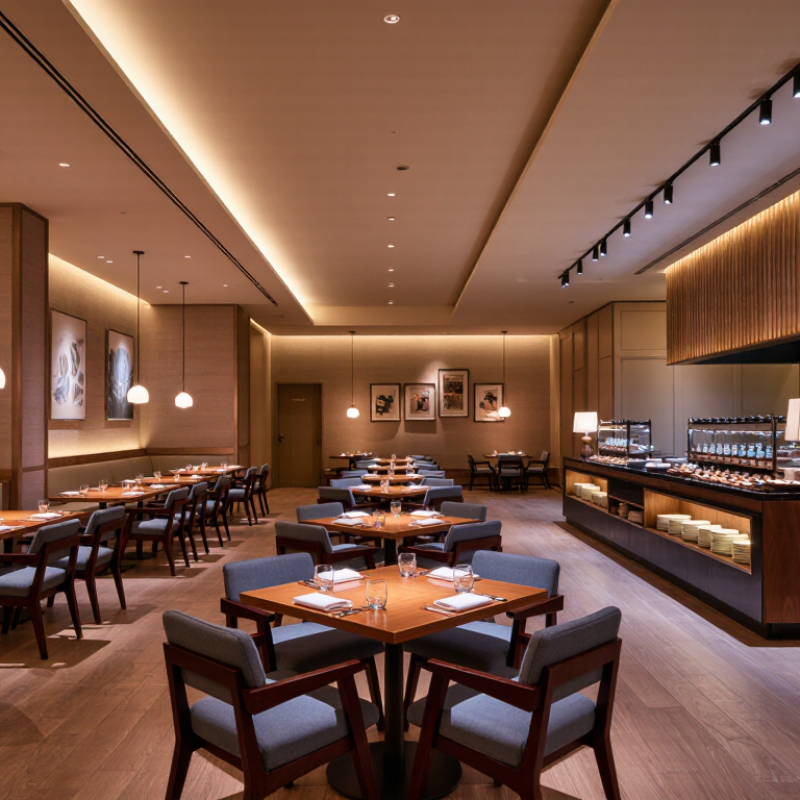
Updating an aging hotel restaurant does not always require demolition, rewiring, or a long closure. The better question is how to update old hotel restaurant lighting without full renovation. Small, deliberate changes can refresh the guest experience while protecting the property’s character.
Lighting designer and author Howard Brandston said, “Good lighting is not about how much light, but how well you see.” That principle matters in hospitality. Guests need clear menus, flattering faces, safe walkways, and comfortable table brightness. A dining room can feel outdated because of harsh ceiling glare, mismatched color temperatures, or dark corners near the bar. These problems often need better control, not more fixtures.
Begin with an on-site lighting audit during lunch and dinner service. Photograph table surfaces, buffet lines, artwork, entrances, and circulation paths. Replace visibly yellowed lamps with consistent LED sources, preferably with suitable color rendering for food and skin tones. Add dimmable wall washers, concealed strip lighting, or adjustable accent lamps where existing circuits allow. Keep pendant locations when possible. Reusing infrastructure reduces dust, labor, and disruption.
However, improvement is rarely perfect on the first attempt. A brighter room may still feel cold. A beautiful pendant may create reflections on polished tables. Test samples at night before ordering widely. Qualified lighting professionals should verify electrical loads, emergency lighting, accessibility, and local requirements. The goal is not a fashionable makeover. It is a calmer, more legible restaurant that feels intentionally maintained. Sometimes, restraint produces the strongest result.
Assessing existing lighting should come before replacing anything. Walk through the hotel like a guest, from the entrance to the room. I usually inspect the lobby, corridors, elevators, restaurants, and bathrooms at different times. Record dark zones, glare, flicker, color differences, and exposed cables. Details matter. A beautiful fitting cannot fix poor light distribution.
Guest experience offers the clearest evidence. Does the reception desk feel welcoming, or does it look harsh and clinical? Can guests read room numbers easily after sunset? Do mirrors show natural skin tones? Measure illuminance with a calibrated meter where possible, then compare results with the hotel’s operating needs. Staff feedback also matters. Housekeepers may notice shadows that managers never see. Guests may quietly avoid poorly lit seating areas.
Small changes can follow the assessment. Adjust aiming angles, replace inconsistent lamps, improve dimming controls, or add discreet task lighting. Test one corridor or guestroom first. Observe guest movement, staff comfort, energy use, and maintenance demands for several days. A warmer color temperature may feel more relaxing, but it can weaken visual clarity in some spaces. I have seen attractive lighting plans fail because they ignored cleaning schedules and replacement access. The assessment should remain practical, measurable, and open to revision.
A successful hotel lighting update begins with purpose, not fixtures. The lobby should feel welcoming, while corridors need calm, even visibility. Guest rooms require layered light for reading, dressing, and relaxing. In restaurants, warmer illumination can support comfort, but tables still need accurate food colors.
IEA’s Buildings 2024 report states that buildings consume about 30% of global final energy. The U.S. Department of Energy also notes that lighting represents roughly 15% of commercial building electricity use. Better control can therefore improve both atmosphere and operating costs.
Walk through the property after sunset. Notice dark corners, glare on mirrors, and shadows across reception desks. Replace failed lamps with compatible, efficient sources before changing ceiling layouts. Add dimming where guests need different moods. Use motion or occupancy controls in storage rooms and staff corridors, not necessarily in guest areas. Small changes matter.
The process is not always clean. A brighter lobby may feel less luxurious. A cooler color temperature may improve visibility but weaken the dining mood. Test one room, one corridor, and one table setting first.
Measure energy use, guest feedback, and maintenance calls for several weeks. The Cornell Hotel Sustainability Benchmarking Index can help compare energy performance across hotel properties, but local operating data remains essential. Generic targets rarely fit every building.
Updating hotel lighting in China does not always require opening walls.
In occupied properties, I begin with a room-by-room audit. I record glare, color shifts, failed drivers, and dark corners near wardrobes. Guest complaints often reveal more than drawings. A warm lobby may still feel dull when vertical surfaces remain unlit. Existing wiring also deserves inspection before any fixture is ordered. Some older circuits are poorly labeled. That mistake can delay an otherwise simple upgrade.
Fixtures should solve visible problems, not follow fashion.
Replace damaged downlights with efficient LED fixtures that match existing ceiling cuts. Add adjustable wall washers for reception art and textured stone. In guestrooms, use layered light: soft bedside lighting, clear desk lighting, and low-level bathroom guidance.
Controls can deliver greater value than extra wattage.
Create scenes for arrival, cleaning, evening, and night to reduce staff adjustments. Occupancy sensors suit storage and service areas, but they may frustrate guests in bathrooms. Test the timing onsite. Paper specifications are not enough.
Light sources need consistent color quality across corridors and rooms. Check color temperature, flicker performance, dimming range, and maintenance access. A reliable supplier should provide photometric data, warranties, and sample testing. Ask electricians to verify load compatibility with existing controls.
I prefer a trial room before full installation. It exposes surprises.
One trial may still miss a seasonal issue, such as winter daylight entering east-facing rooms. Review feedback after several weeks, then refine scenes, aiming levels, or fixture positions instead of replacing everything.
Updating a top hotel in China does not always require demolition. A layered lighting review can reshape the guest experience within existing ceilings and walls. Start with ambient light, then add task and accent layers. In a lobby, dimmable ceiling fixtures can provide calm general illumination. Table lamps and concealed wall lights can soften seating areas. Keep circulation paths clear and evenly lit. Too many bright pools feel confusing.
Guestrooms need different control scenes for arrival, reading, dressing, and sleep. A warm 2700K to 3000K setting usually supports evening comfort. Near mirrors, vertical light reduces facial shadows better than one overhead lamp. In corridors, low-glare wall lighting can guide guests without creating a harsh runway. Restaurants benefit from focused table light and restrained ceiling brightness. Measure illuminance, glare, and color consistency after installation. Numbers matter.
Small changes can expose hidden problems. A brighter lobby may make a dark restaurant feel less welcoming. A warmer lamp may also weaken artwork visibility or cleaning checks. I have seen teams adjust every fixture equally, then wonder why rooms still feel flat. That approach is convenient, but rarely precise. Test one zone at night, invite housekeeping and front-desk staff, and record guest reactions. Some adjustments will fail. Review them honestly before expanding the setting across the property.
| Hotel Zone | Existing Lighting Issue | Layered Lighting Adjustment | Recommended Illuminance | Recommended CCT | CRI Target | Expected Energy Reduction | Ambiance Improvement |
|---|---|---|---|---|---|---|---|
| Guest Room | One bright ceiling fixture creates a flat, overly uniform appearance. | Keep the existing ceiling light for general lighting; add bedside, desk, and concealed cove lighting on separate controls. | 100–200 lux | 2700–3000 K | CRI ≥ 90 | 20–35% | Warmer and more residential |
| Guest Room Corridor | Continuous high-output lighting remains fully active throughout the night. | Use wall-washing or low-level indirect light, occupancy sensors, and nighttime dimming to 30–50% output. | 75–150 lux | 2700–3000 K | CRI ≥ 80 | 30–50% | Quieter nighttime atmosphere |
| Lobby | Uniform overhead illumination reduces focal points and weakens the arrival experience. | Combine ambient ceiling light with accent lighting on the reception desk, artwork, architectural details, and seating areas. | 150–300 lux | 2700–3500 K | CRI ≥ 90 | 15–30% | More welcoming and visually layered |
| Reception Desk | Staff faces and documents are poorly illuminated, while the background is visually dominant. | Add glare-controlled task lighting and vertical illumination behind the desk; dim decorative lighting independently. | 300–500 lux | 3000–3500 K | CRI ≥ 90 | 10–25% | Clearer service interaction |
| Restaurant and All-Day Dining | High general brightness makes tables look flat and reduces evening intimacy. | Lower ambient light after sunset, then add pendant, table, wall, and feature lighting with independent scene controls. | 100–200 lux | 2700–3000 K | CRI ≥ 90 | 25–40% | Improved food presentation and comfort |
| Meeting Room | Single-mode lighting causes screen reflections and uncomfortable facial shadows. | Separate presentation, conference-table, circulation, and perimeter lighting; install dimming presets for different meeting modes. | 300–500 lux | 3000–4000 K | CRI ≥ 80 | 20–35% | Better concentration and screen visibility |
| Spa and Wellness Area | Cool, bright lighting conflicts with the intended relaxation experience. | Use concealed indirect lighting, low-glare wall lighting, dimmable coves, and localized task lighting at treatment stations. | 50–150 lux | 2200–2700 K | CRI ≥ 90 | 30–50% | Calmer and more restorative |
| Corridor and Lift Lobby | Excessive brightness and glare make circulation spaces feel institutional. | Retain safe general illumination, add vertical wall-washing, and apply time-based dimming during low-traffic periods. | 100–200 lux | 2700–3000 K | CRI ≥ 80 | 25–45% | More refined and comfortable |
| Facade and Entrance | Fixed-output exterior lighting wastes energy and provides limited visual hierarchy. | Prioritize the entrance canopy, signage zone, landscape elements, and facade details with astronomical time-clock controls. | Context-dependent | 2700–3000 K | CRI ≥ 80 | 30–60% | Stronger arrival identity |
| Planning reference: Illuminance ranges are practical hospitality targets and should be verified against the applicable Chinese lighting, electrical, fire-safety, accessibility, and energy-efficiency requirements for the specific property. Actual savings depend on lamp type, operating hours, control strategy, daylight availability, and existing fixture condition. | |||||||
China Top Hotel Lighting: How to Update Without Renovation?
Measure Results and Maintain the Updated Lighting System
A hotel lighting update should begin with evidence, not decoration. Record lux levels, fixture wattage, operating hours, guest complaints, and monthly electricity use. Measure corridors, guest rooms, restaurants, and lobbies at different times. A lower power bill alone can mislead. Lighting may improve while dark corners remain uncomfortable. The International Energy Agency reports that lighting uses about 15% of global electricity. Small operational gains can therefore create meaningful savings.
After updating the system, compare results against the original baseline every month. Check illuminance near reception desks, reading areas, mirrors, and stairways. Review occupancy data and maintenance tickets together. The U.S. Department of Energy notes that lighting controls can produce additional savings when properly commissioned. However, controls sometimes fail in real hotel conditions. Sensors may be blocked by furniture, or guests may dislike sudden dimming. That feedback deserves attention.
Tips: Clean lenses and diffusers during scheduled housekeeping maintenance. Replace failed lamps with matching color temperature and beam angles. Keep a simple lighting log for each floor. Test emergency lighting according to local requirements. Review energy use quarterly, not only after installation. UNEP’s 2023 Global Status Report states that buildings consume about 30% of global final energy, so maintenance should remain part of the operating budget. A system that looks modern today can perform poorly next year.
Measure Results and Maintain the Updated Lighting System
The chart compares lighting power density, measured in watts per square metre, before and after a lighting update. Lower power density indicates reduced lighting energy demand while maintaining the required visual environment. After installation, verify illuminance with a lux meter, review monthly electricity readings, clean luminaires, check sensors, and recalibrate dimming controls to keep performance stable.
Walk through the property like a guest. Check the entrance, lobby, corridors, elevators, restaurants, and bathrooms. Record glare, flicker, dark zones, color differences, and exposed cables. A beautiful fixture cannot repair poor light distribution.
Notice whether reception feels warm or clinical. Check if guests can read room numbers after sunset. Housekeepers may identify shadows around mirrors and cleaning areas. Guests might quietly avoid dim seating zones. Small clues matter.
Lobbies need welcoming, comfortable illumination. Corridors need calm and even visibility. Guest rooms need reading, dressing, arrival, and sleep settings. Restaurants need warm light without distorting food colors. Bathrooms need clear mirror lighting.
Often, yes. Adjust aiming angles and replace mismatched lamps. Add discreet task lights and improve dimming controls. Use existing ceiling points when possible. Some layouts still need more work.
Combine ambient, task, and accent lighting. Use ceiling fixtures for general visibility. Add table lamps near seating areas. Use concealed wall lights for softer comfort. Keep circulation paths evenly lit.
A warm setting around 2700K to 3000K often supports evening comfort. Near mirrors, vertical lighting can reduce facial shadows. However, warmer light may weaken artwork visibility or cleaning checks. Test the room at night. Do not trust appearance alone.
Storage rooms and staff corridors are practical locations. They can reduce unnecessary operating hours. Guest areas need more careful control. Sudden changes may feel uncomfortable or disruptive. Test quietly.
Test one corridor, one guest room, and one table setting. Measure illuminance, glare, color consistency, energy use, and maintenance calls. Ask front-desk and housekeeping staff for comments. Observe guest movement for several days. Some adjustments will fail. Review them honestly.
Updating a hotel’s lighting does not always require construction, demolition, or a complete redesign. The process begins by assessing the existing fixtures, color quality, brightness, glare, energy use, and guest feedback in areas such as the lobby, guest rooms, corridors, restaurants, and event spaces. Next, define a clear lighting purpose for each area, such as creating a welcoming arrival, improving dining comfort, supporting accurate food presentation, or making circulation safer. This approach also answers the practical question of how to update old hotel restaurant lighting without full renovation.
Strategic improvements can include replacing outdated lamps, adding adjustable controls, correcting color temperature, and introducing dimming or scheduling where appropriate. Layered lighting—combining ambient, task, accent, and decorative effects—can refresh the atmosphere while keeping the existing layout largely intact. After implementation, compare guest impressions, visual comfort, operating costs, and maintenance needs with the original conditions. Regular cleaning, inspection, and timely replacement will help preserve the updated lighting quality and extend the system’s useful life.

Sienna Lights