Lighting quietly shapes how a hotel feels, often before guests consciously notice it. A soft glow at reception can make arrival feel calm, while harsh overhead light may expose every glare on the counter. In guest rooms, bedside lamps help visitors read or unwind without flooding the entire space. Bright, even lighting in a bathroom can make routine tasks easier. Small choices matter.
The question “how does lighting affect hotel guest experience” has no single answer. Guests arrive at different hours, have different needs, and respond to light in personal ways. Thoughtful hotel lighting can support comfort, navigation, rest, and a sense of welcome. It can also help staff work safely and present shared spaces clearly. But a beautiful fixture is not enough if it leaves a dark corner or casts an unflattering mirror shadow.
This guide explores ten practical ways lighting influences a hotel stay, from the first impression in the lobby to the quieter moments in a guest room. It considers brightness, color, placement, control, and consistency across spaces. The best solution is rarely the most dramatic one. It is the one guests can use without thinking about it. Still, preferences differ, and even a well-planned scheme may miss something. That is worth checking with real guest feedback, not assumptions alone.
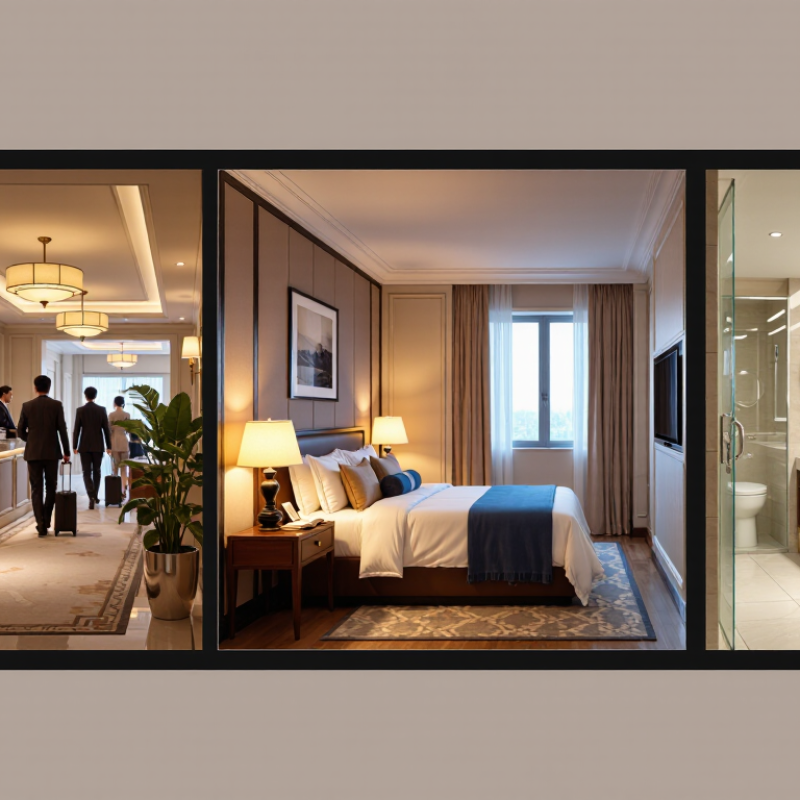
A guest often reads the reception before reading the room. At check-in, 300 lx of maintained illuminance is the benchmark listed for reception areas in EN 12464-1:2021, the European standard for lighting in indoor workplaces. It gives staff enough light to check documents and handle keys, while helping guests see faces clearly. The number is a useful starting point, not a promise of comfort.
Light the counter evenly, then soften the surrounding space. A bright screen beside a dim face can make an arrival feel oddly clinical. Warm wall lighting, gentle vertical illumination, and controlled reflections help guests find the desk without searching. Keep glare out of sightlines: a polished stone surface or glossy brochure can bounce a ceiling fitting straight into someone’s eyes. Small details matter.
The standard’s figure should be checked against the actual task area and layout; it does not prescribe one mood for every hotel. Measure at the counter, then observe the space from a seated guest’s eye level. Too bright? It happens. Dimming controls can help staff adjust for daylight and evening arrivals, though controls are only useful when people know how to use them. A reception can meet 300 lx and still feel cold. That deserves a second look.
| Lighting factor | Reference or design data | Potential effect on the guest experience | Practical application at arrival |
|---|---|---|---|
| 1. Reception-desk illuminance | EN 12464-1 lists 300 lx maintained illuminance for reception-desk tasks. Illuminance is measured on the relevant task plane. | Supports reading forms, payment screens, and other check-in tasks without relying on dim ambient lighting alone. | Light the counter task area evenly and verify illuminance at the working surface; avoid bright spots and deep shadows. |
| 2. Glare control | The EN 12464-1 reception-desk entry gives a UGR limit of 22. UGR is a glare assessment measure, not an illuminance value. | Reducing uncomfortable glare can make the reception area easier to look at and use. | Consider luminaire position, shielding, screen reflections, and bright sources within guests’ typical lines of sight. |
| 3. Colour rendering | EN 12464-1 specifies a minimum general colour rendering index (Ra) of 80 for the reception-desk task entry. | Good colour rendering helps faces, clothing, documents, and interior finishes appear more naturally coloured. | Check the light source’s Ra rating and assess colours in the actual space, especially at the check-in counter. |
| 4. Light on faces | The 300 lx reception-desk figure concerns the task plane; it does not by itself specify a universal face-lighting target. | Balanced light on faces can help guests and staff see one another clearly during greetings and conversations. | Assess vertical light at standing and seated eye levels; avoid relying only on downlights that can create strong facial shadows. |
| 5. Entrance-to-lobby transition | A single illuminance value does not describe every entrance condition; daylight, weather, glazing, and the adjoining interior affect perceived brightness. | A gradual visual transition can make it easier to move from bright outdoor conditions into the lobby. | Review the entrance in daytime and after dark, and avoid abrupt patches of darkness or excessive brightness along the arrival route. |
| 6. Wayfinding and visual hierarchy | There is no single EN 12464-1 lux value that guarantees intuitive wayfinding; visibility depends on contrast, layout, and the viewing direction. | Clear visual emphasis can help guests identify the reception desk, queue, and main route into the hotel. | Use a legible lighting hierarchy while keeping signs and route decisions visible from the entrance. |
| 7. Consistent colour appearance | EN 12464-1 does not prescribe one universal correlated colour temperature (CCT) for every hotel reception. | Consistent-looking light can make adjoining arrival areas feel more visually coherent. | Coordinate the colour appearance of sources in connected spaces and check the result alongside daylight and interior finishes. |
| 8. Daylight and electric-light balance | Daylight levels vary over time, so the maintained lighting criteria should be assessed alongside the space’s daylight conditions. | A balanced mix can help the reception remain usable as outdoor light changes. | Check for strong window contrast, reflections, and dark counter areas at different times of day. |
| 9. Lighting controls | Control settings are a design and operation choice; the reception-desk illuminance criterion remains the relevant task benchmark. | Appropriate adjustment can help maintain useful lighting as daylight and operating conditions change. | Set and test scenes for daytime and evening use, ensuring that dimming does not leave reception tasks inadequately lit. |
| 10. Route and threshold visibility | The reception-desk target applies to the desk task, not automatically to every floor, stair, or circulation surface. | Visible changes in level and a clear path can make the entrance-to-reception journey easier to navigate. | Inspect the full arrival route for shadows, reflections, and poorly distinguished thresholds; assess circulation areas against their applicable lighting requirements. |
Note: EN 12464-1 is a workplace-lighting standard. Its reception-desk values are task-lighting criteria, not a complete specification for the overall guest experience. Confirm requirements against the applicable national adoption and project conditions.
Warm, dimmable light can make dinner feel intimate while keeping food visible. Later, lower ambient light may suit lounge chairs. One setting rarely fits everyone.
Add brighter task lights near menus and reading areas. Test them from seated positions. Small details matter.
Yes. Use layered fixtures with separate controls for tables and lounge areas. Check that each control changes only the intended lights.
Energy guidance reports that LEDs use at least 75% less energy than incandescent lighting. Actual savings depend on controls, use, and installation.
They can last up to 25 times longer. Operating conditions matter, though. Dust and frequent switching may affect lamp life.
No. Results depend on the setup and how lights are used. Track energy use before and after changes.
Test them in the actual room during daylight and evening hours. A calm dusk setting may feel gloomy at lunch.
Check fixture and dimmer compatibility, flicker, and uneven color. Record energy use, too. The first bill may not tell the whole story.
Lighting shapes a hotel stay from the moment guests arrive. A welcoming reception with around 300 lx can make check-in feel clear and comfortable, while corridor lighting of around 100 lx can help guests find their way and move safely. In guestrooms, approximately 300 lx at the bedside supports reading, while softer, adjustable light can create a more restful atmosphere. These choices show how does lighting affect hotel guest experience: it influences first impressions, ease of movement, comfort, and the mood of shared spaces.
Dining areas and lounges benefit from dimmable lighting that can shift to suit meals, conversation, or relaxation. Efficient lighting also matters behind the scenes. LEDs use at least 75% less energy than traditional lighting, according to the U.S. Department of Energy, and can reduce maintenance needs. Thoughtful lighting design can therefore improve guest comfort while helping hotels manage energy use and upkeep.

 Sienna Lights