How to Create the Best Club KTV Atmosphere in 2026?

Time:2026-11-19 Author:Sienna
0%

A memorable club KTV atmosphere is more than bright lights and a powerful sound system. In 2026, guests expect rooms that feel lively, comfortable, and easy to use. The challenge is balancing energy with clarity: music should feel full without drowning out conversation, while lighting should create excitement without making lyrics hard to read. This guide explores how to create an immersive atmosphere in a club KTV through practical choices in acoustics, lighting, layout, and service. Small details matter. A clear song-selection screen, a reachable microphone stand, and a quiet place to set a drink can make a room feel thoughtfully designed.

Sound comes first. Room shape, speaker placement, and soft surfaces all affect how voices and music travel. A vocal that sounds crisp in one room may feel harsh in another, so testing each space at realistic volume is essential. Lighting should support the moment, shifting gently between song performance and relaxed conversation. Avoid effects that flash constantly; they can tire guests and distract from the stage. Comfort matters. Good airflow, sensible seating, and uncluttered walkways help people stay at ease through a long visit. Operators should also collect guest and staff feedback, then adjust settings based on what actually works. Not every design choice will succeed. A dazzling wall may look impressive in photos yet feel tiring in person. The aim is a welcoming atmosphere that sounds balanced, looks distinctive, and works reliably night after night.
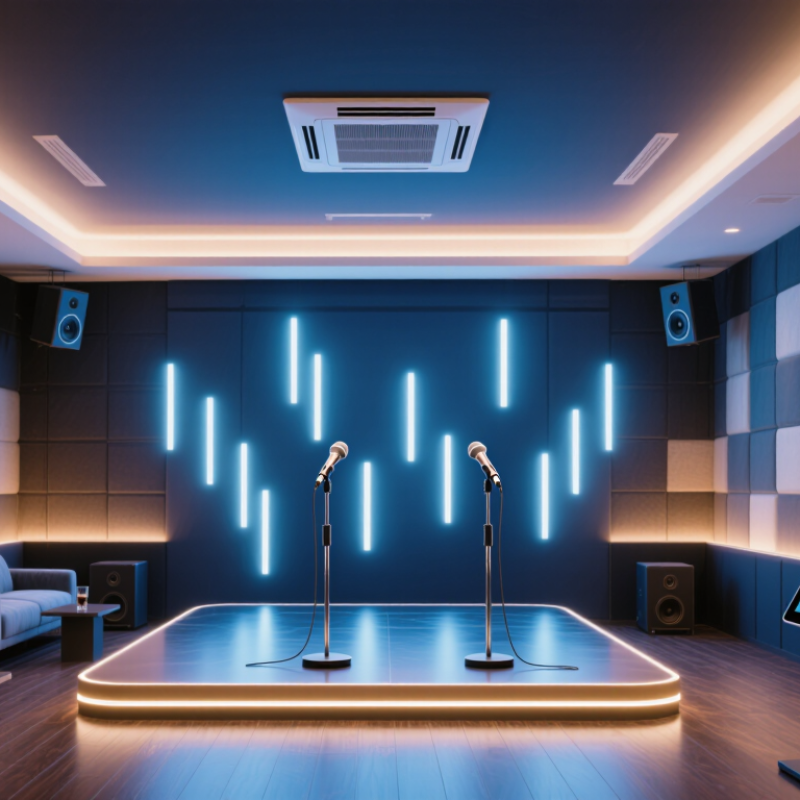
How to Create the Best Club KTV Atmosphere in 2026?

Define the Club KTV Atmosphere and Its Core Elements

Club KTV atmosphere is the feeling a room creates through sound, light, layout, and human interaction. It should feel energetic, yet comfortable enough for conversation. That balance matters. The WHO’s 2022 Global Standard for Safe Listening Venues and Events recommends a maximum sound level of 100 dB LAeq over 15 minutes. It also calls for sound monitoring, quiet zones, and trained staff. These measures support comfort as well as hearing protection.

Core elements work together: speech-friendly acoustics, layered lighting, clear circulation, and responsive service. Use warm, low light near seating and brighter light at the entrance. Give hosts simple controls to adjust scenes between songs. Acoustic treatment can reduce harsh echoes without making music feel flat. For staff exposure planning, NIOSH recommends limiting occupational noise to 85 dBA over eight hours. Keep routes through the room clear, and place microphones within easy reach. Details can be imperfect. A polished visual scheme may still feel cold if service is slow or the volume overwhelms conversation. Test lighting and sound in an occupied room; empty rooms can give a misleading impression.

Assess the Venue, Audience, and Entertainment Needs

How to Create the Best Club KTV Atmosphere in 2026?
Assess the Venue, Audience, and Entertainment Needs

A memorable KTV room starts with the space, not the lighting budget. Walk through it during a busy hour. Listen for echo near the glass walls, check whether guests can reach the microphones easily, and notice where queues form. IFPI’s Engaging with Music 2023 report found that surveyed listeners spent an average of 20.7 hours per week with music. That is a useful reminder: sound quality matters, but a room should also make singing and socializing comfortable. Test the system at realistic occupancy. A sound check in an empty room can mislead.

Know who is coming and why. A group of colleagues may want familiar songs and clear conversation; friends celebrating a birthday may prefer energetic lighting and quick song selection. Ask about group size, age range, preferred languages, and accessibility needs before choosing the room layout or entertainment. Small details count: readable lyrics, a stable microphone stand, and enough table space for shared snacks. Keep the controls simple.

Pause and observe. Guest preferences rarely fit one template, and we may guess wrong. Track song requests, room changes, and feedback after each event, then adjust the playlist, volume, and pacing. The goal is not maximum noise. It is a space where different guests feel at ease joining in—or simply listening.

Plan Lighting, Acoustics, Layout, and Visual Design

How to Create the Best Club KTV Atmosphere in 2026?

A memorable club KTV room balances lighting, acoustics, layout, and visual design. Use layered light: soft ambient strips, focused table lighting, and dimmable color accents near the stage. Avoid aiming bright fixtures at singers; glare makes lyrics and faces harder to see. For sound, add acoustic panels at reflection points and soft finishes where practical. Too much absorption can make a room feel oddly flat, so test the space with real music and voices.

Tips: Walk the room while someone sings. Listen for harsh echoes near corners and check that lyrics remain readable from every seat. Keep pathways clear, especially between tables and the stage. Small adjustments matter.

Arrange seating so guests can see performers without turning constantly. Leave enough space for staff to move safely, and keep speakers away from corners when possible. Use a restrained visual palette, then repeat one or two colors in wall details, upholstery, and stage lighting. A striking design can still feel tiring after an hour. One common planning mistake is choosing fixtures before checking ceiling height and room dimensions. Revisit the plan on site; drawings rarely show every awkward shadow.

How to Create the Best Club KTV Atmosphere in 2026?

Plan lighting, acoustics, layout, and visual design around guest comfort and clear sightlines.

Suggested working-light targets: 100 lux for guest circulation, 200 lux at check-in, and 300 lux for bar service and cleaning. Treat these as planning references, not universal code requirements; use dimmable scene lighting to create a more intimate guest experience, and check applicable local standards.

Select and Integrate Audio, Karaoke, and Control Systems

A convincing club KTV room depends on systems that work together, not on volume alone. Choose speakers for clear vocals and even coverage across the room. Ask an audio professional to assess the space, including reflective glass, low ceilings, and likely audience positions. These details affect where speakers belong and how sound carries. Keep the singer’s microphone distinct from the backing track, and set monitor levels carefully to reduce feedback. Loud is not always clear.

Select karaoke equipment with a responsive song search, readable lyrics, and reliable microphone inputs. Then connect it to a control system that lets staff adjust music, microphones, lighting, and screen settings without crossing the room. Simple controls matter during a busy evening. Test a complete song from the guest’s seat and the staff station. Check lyric timing, vocal balance, screen visibility, and transitions between songs. Not every room behaves as the drawings promise. A speaker may need repositioning, or a control label may confuse staff. Make adjustments in the finished room, document useful settings, and leave enough time for another test.

Operate, Maintain, and Refine the KTV Experience

How to Create the Best Club KTV Atmosphere in 2026?

A memorable KTV room depends on daily operations, not décor alone. Staff should check microphones, speakers, screens, and room controls before opening. Walk each room and listen from the sofa, not just beside the sound desk. A harsh high note may be barely noticeable near the speakers but tiring across the room. Small details matter.

AVIXA’s 2023 Industry Outlook and Trends Analysis estimated global professional audiovisual revenue at US$325 billion in 2023. This broad market figure is not KTV-specific, but it reflects the scale of investment in reliable audio and visual systems. Protect that investment with routine maintenance: clean microphone grilles, inspect cables, test backup equipment, and log recurring faults. Keep volume consistent between rooms. NIOSH guidance sets 85 dBA over eight hours as a recommended occupational exposure limit, a useful reference when reviewing staff exposure and sound levels.

Refine the experience through observation. Track which rooms generate repeat requests for help, then adjust controls or staff instructions. Ask guests one clear question after their session: Was the sound comfortable? A perfect preset does not exist. We may overcorrect the bass. Listen again tomorrow. Keep change records, since small adjustments can improve one room and weaken another. A short weekly review helps teams spot patterns before guests do.

How to Create the Best Club KTV Atmosphere in 2026? — Operate, Maintain, and Refine the KTV Experience

Experience Area What to Measure Practical Operating Target Operating Routine How to Refine the Experience
Room readiness Time from checkout to a room being ready for the next booking Set a room-specific turnaround target, such as 10–15 minutes, and adjust it for room size and cleaning requirements. Use a checklist for surfaces, microphones, cables, song system, lighting, and restocking; record completion before marking the room available. Compare actual turnaround time with booking gaps. Add support during peak periods rather than shortening essential cleaning.
Sound quality Microphone clarity, speaker balance, distortion, and customer-reported volume comfort Keep vocals intelligible and free of feedback; establish comfortable room levels and monitor staff exposure during long shifts. Test both microphones and each audio channel at opening. Inspect batteries, connectors, and speaker placement regularly. Track sound-related complaints by room. Adjust microphone gain, equalization, or speaker position before increasing overall volume.
Noise management Sound leakage into corridors and neighboring rooms Set site-specific limits based on local rules, building conditions, and the needs of adjacent spaces. Check door seals and room boundaries; include a corridor listening check during busy periods. Address gaps, rattling panels, or door-closure problems first. Use calibrated measurement equipment when investigating persistent concerns.
Air and comfort Room temperature, odor, ventilation operation, and guest comfort feedback Maintain a comfortable, consistent temperature and follow applicable ventilation and indoor-air requirements. Check air-conditioning and ventilation at opening; keep vents unobstructed and follow the equipment maintenance schedule. Review comfort complaints by room and time of day. Ask a qualified HVAC professional to investigate recurring ventilation issues.
Lighting and atmosphere Lighting scenes, transitions, glare, and guest control requests Provide clear presets for singing, socializing, and room entry, with a usable level of general illumination. Test preset scenes before service and confirm that controls are easy to find and operate. Use guest feedback to refine scene brightness and color. Keep walkways and exits visibly clear under all settings.
Song system Search success, playback interruptions, and requests for unavailable songs Keep the catalog and search functions current; track errors and repeated requests rather than relying on memory. Check network and playback at opening. Maintain a simple process for reporting missing or incorrect content. Review search failures and repeat requests periodically, then update content through properly licensed sources.
Microphone and equipment hygiene Cleaning completion, visible condition, and equipment faults Clean shared touchpoints between uses according to product instructions and the venue’s hygiene procedures. Provide approved cleaning materials; inspect microphone grilles, remote controls, and touchscreens during room reset. Replace worn or damaged accessories promptly. Avoid liquids or cleaning methods that may damage electronic equipment.
Safety and accessibility Clear exits, unobstructed routes, equipment hazards, and assistance requests Keep exits and access routes clear at all times and meet applicable fire, building, and accessibility requirements. Include a documented safety walk-through in opening checks; train staff on incident response and emergency procedures. Log hazards and incidents, assign corrective actions, and verify completion. Do not use décor or cables to obstruct routes.
Service and responsiveness Time to acknowledge requests and resolve room problems Set a realistic response standard that reflects staffing levels and clearly communicate how guests can request help. Assign room coverage during service and record recurring issues, resolution time, and any follow-up needed. Use complaint patterns to identify training or equipment needs; confirm that the guest’s issue was resolved.
Continuous improvement Guest satisfaction, repeat issues, room utilization, and maintenance completion Review a small, consistent set of measures weekly or monthly; compare like-for-like days and time periods. Keep a shared log of inspections, repairs, feedback, and actions with an owner and due date. Test one change at a time, such as a lighting preset or check-in step, and retain it only if results and feedback improve.

Note: Targets in this table are practical planning examples, not universal standards. Adapt them to room design, occupancy, equipment guidance, local regulations, and guest feedback.

FAQS

What creates a comfortable club KTV atmosphere?

Sound, lighting, room layout, and service work together. Keep the room lively but easy to talk in. Balance matters.

How should the lighting be arranged?

Use warm, dim light near seats and brighter light at the entrance. Give staff simple controls to change lighting between songs.

How can a venue make sound more comfortable?

Reduce harsh echoes with acoustic treatment and test volume across the room. Guidance recommends a maximum average of 100 dB over 15 minutes. Quiet areas can help, too.

What should staff check before guests arrive?

Test microphones, speakers, screens, and room controls. Clean microphone grilles and inspect cables. Listen from the sofa, not only beside the sound desk.

How can a room layout help guests?

Keep walking routes clear and microphones within easy reach. Leave table space for snacks and make lyrics easy to read.

How should venues adapt to different groups?

Ask about group size, preferred languages, and accessibility needs. Colleagues may want conversation, while a birthday group may prefer brighter lights. We may guess wrong.

How can staff learn what guests prefer?

Track song requests, room changes, and help requests. Ask one simple question after each session: “Was the sound comfortable?” Adjust from real feedback.

How often should a venue review its setup?

A short weekly review can reveal recurring issues. Keep a record of changes, since one adjustment may help one room but weaken another. Listen again tomorrow.

Conclusion

Creating the best club KTV atmosphere in 2026 starts with understanding what makes the experience feel exciting, comfortable, and easy to enjoy. A successful venue brings together music, lighting, acoustics, visual design, and social interaction in a way that suits its space, audience, and entertainment needs. Before making design decisions, assess the venue’s size and layout, consider who will use it, and identify the kind of experience you want to offer.

To understand how to create an immersive atmosphere in a club KTV, plan each element as part of one connected experience. Use layered lighting and clear visual features to build energy, arrange seating and performance areas for comfort and visibility, and manage sound so singing remains clear without overwhelming conversation. Integrate audio, karaoke, and control systems for simple operation, then test them in real conditions. Regular maintenance and feedback from guests and staff can reveal what works and where adjustments will make the experience even better.

Sienna

Sienna

Sienna is a skilled marketing professional with a deep expertise in our company’s core products and services. With a passion for innovation and detail, she plays a pivotal role in crafting insightful blog posts that not only highlight the unique features of our offerings but also provide valuable......